The Hidden Cost of Overpricing Your Home
Overpricing a luxury home rarely results in a higher sale price. Here is how expired and canceled listings weaken your position, and what to do instead.
Every seller wants to test the market at the highest number possible. It feels like a low-risk strategy: if the price is too ambitious, you can always reduce it later. In today's market, that logic works against you.
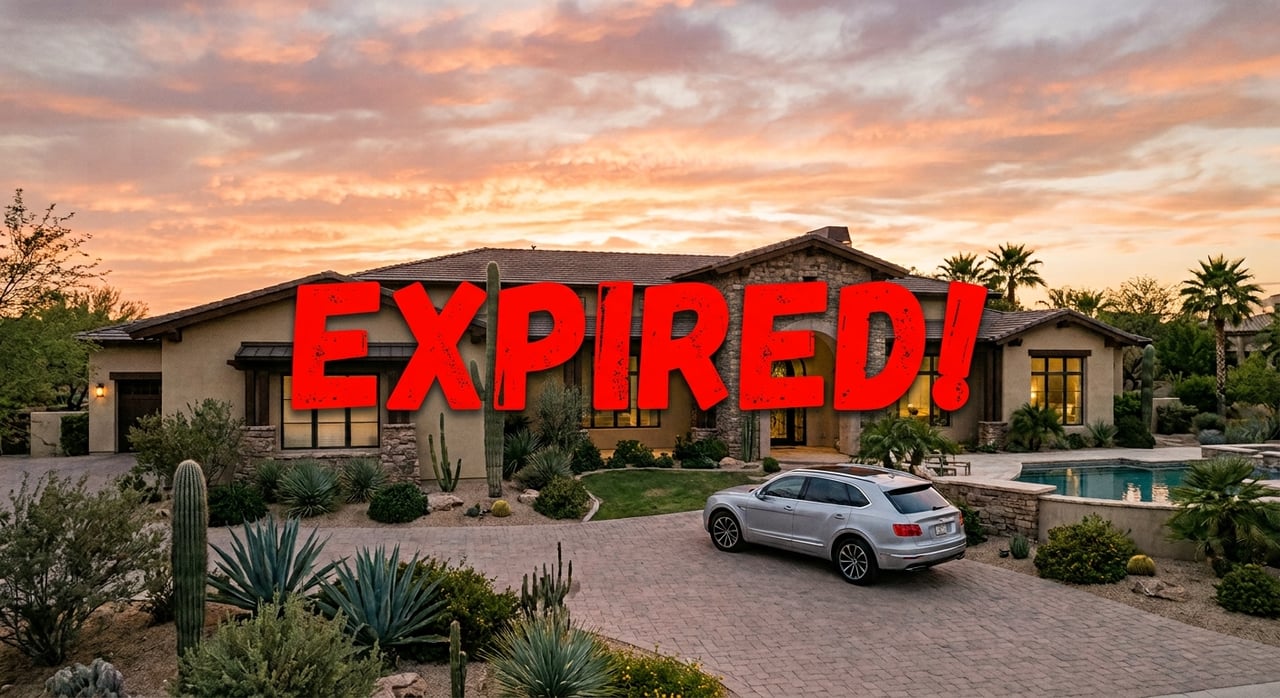
When I review MLS activity across Phoenix and Scottsdale, I keep seeing the same pattern: a home is listed, expires, is canceled, and returns weeks later, often more than once. Each cycle costs the seller something.
The Market Rewards Accuracy, Not Ambition
A correctly priced home draws its strongest interest in the first two to three weeks. Buyers who are actively searching see it, agents preview it, and the home is compared against its true competition.
Price it above the market, and that window closes without an offer. The buyers who would have paid fair value move on to homes that are priced correctly. By the time you adjust, you are no longer the new listing everyone is watching. You are a home that has been sitting.
How Time on Market Erodes Your Price
The longer a home sits, the less leverage the seller has. Buyers and their agents read days on market as a signal, and they tend to arrive with a simple question: what is wrong with it?
Even when nothing is wrong, the perception takes hold. The price reductions that follow are usually larger than the reduction it would have taken to price correctly at the start. Many sellers end up accepting less than they would have received if they had priced accurately on day one.
The Re-listing Problem
Some sellers respond to a stalled listing by letting it expire or canceling it and re-listing, hoping for a fresh start. That is rarely how it works.
The MLS keeps the full history. A knowledgeable buyer's agent will review every prior listing, every price change, and every gap between them. If a home has been on the market three or four times, that agent will bring it up in negotiation, and it gives them real leverage. The argument is easy to make: the seller clearly wants to sell, so what happened the previous times?
At that point you are negotiating against your own listing history, and you are doing it from a weaker position than you started in.
What to Do Instead
Price to the current market, not the last one. Comparable sales from the past six months matter more than what a neighbor hoped to get, or what a valuation tool estimates.
Treat the first two weeks as your strongest window. This is when the most motivated buyers are watching. Launching at the right price captures that attention.
Invest in presentation before launch. Professional photography, staging, and a clear narrative about the home support the price. They do not replace it.
Be honest about feedback. If showings are steady but offers are not coming, the market is telling you something. Adjust early rather than waiting for the listing to go stale.
If Your Home Has Already Expired
A prior expiration is not the end of the story. It does mean the next launch has to be handled deliberately, with a reset on pricing, presentation, and positioning, and a clear plan for how the listing history will be addressed with buyers' agents. Homes do sell after expiring, and often well, but only when the strategy changes rather than simply the listing date.
Frequently Asked Questions
What happens if I overprice my home?
It typically sits longer, attracts fewer showings, and ultimately sells for less than a correctly priced home would have. Extended time on market also reduces your negotiating power.
Does relisting a home help it sell?
Rarely on its own. Buyers' agents can see prior listings and price history in the MLS, and they use that information in negotiation.
Can I start high and reduce the price later?
You can, but the initial launch is when interest peaks. Reductions made after the home has gone stale usually have to go deeper to overcome the perception of a problem.
How do I know what the right price is?
A pricing analysis based on recent closed sales, current competing inventory, and the specific condition and features of your property. Automated estimates cannot account for those details.
Thinking about selling, or dealing with a listing that did not sell the first time? I would be glad to walk you through a pricing strategy tailored to your property.